When Asphalt Becomes Energy
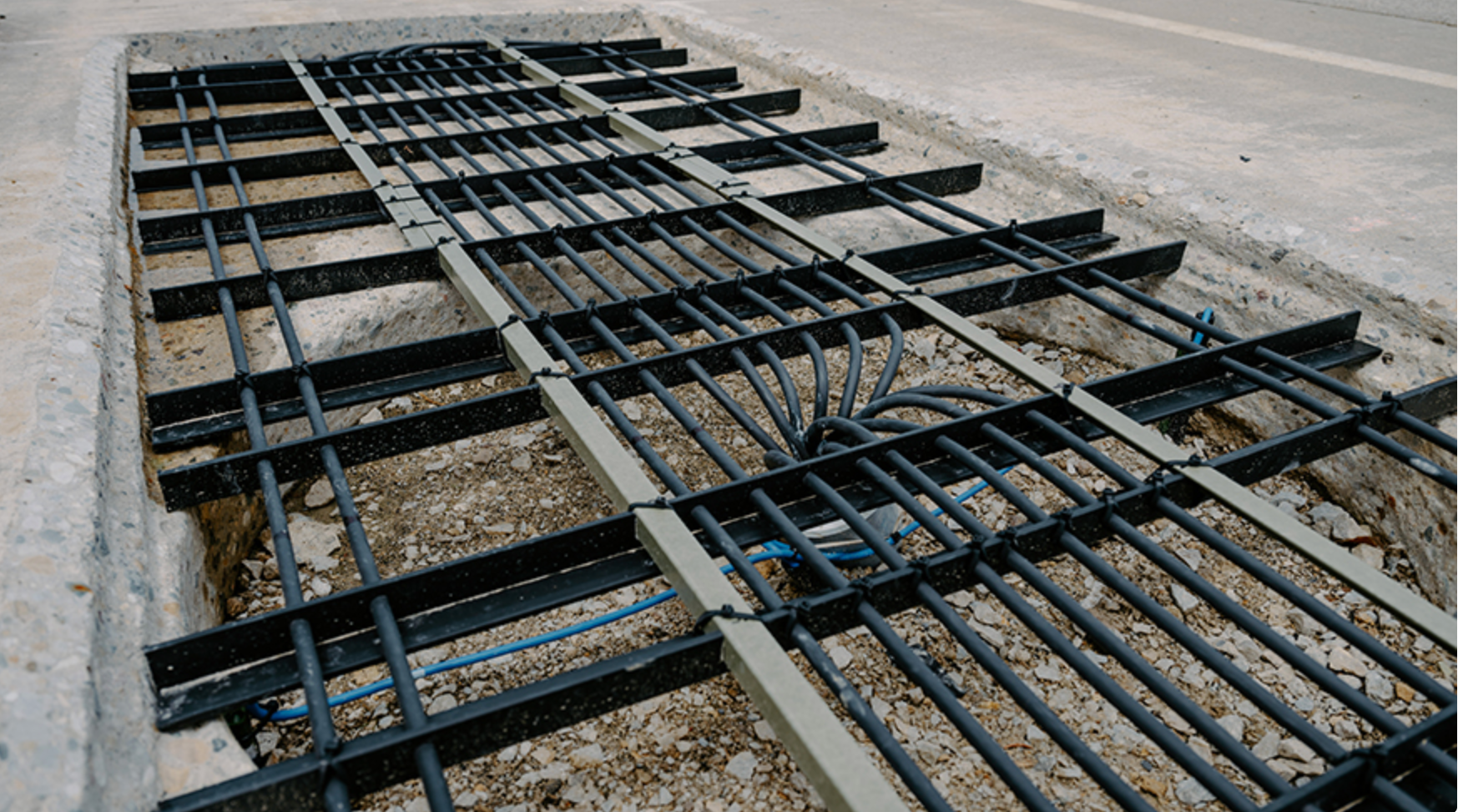
Source: Purdue University/Kelsey Lefever
The highway, once merely pavement, is evolving. Soon, select lanes won't just guide freight—they will energize it. Power will flow invisibly from road to rig, mile after mile. There will be no stops, plugs, or downtime. What was science fiction is now reality through engineering.
Purpose-Built Innovation for Heavy Freight
Early experiments with electrified roadways have been conducted in some states and countries, yet most were initially conceived with passenger cars in mind. Commercial trucks, however, operate under a different scale. They require more energy, traverse long distances, and function within tight delivery windows. Conventional charging stations strain under these realities.
A new approach has emerged to answer those constraints. Researchers at Purdue University, in partnership with Cummins and the Indiana Department of Transportation (INDOT), have designed a dynamic charging system for heavy-duty trucks.
Embedded transmitter coils beneath the concrete pavement generate magnetic fields that stream power directly into vehicles traveling at highway speeds. The process is similar to a smartphone charging on a wireless pad, scaled to industrial proportions. Cummins contributed a Class 8 battery-electric truck to integrate with this energized roadway.
Validated Beyond the Laboratory
This concept moved from theory into practice. On a controlled section of highway in West Lafayette, Indiana, the system was tested. The result was a success: wireless charging in motion is not only feasible, but also operationally sound for large-scale freight movement. Testing on a highway was deliberate due to having the highest traffic loads.
For fleet operators, the system will produce route optimization, vehicle architecture, and energy budgeting.
A Recalibration of the Trucking Economy
Electrified highways promise to reshape freight transport in several decisive ways. Vehicles remain productive longer, as recharging no longer demands detours or delays. Battery packs are smaller, trimming weight and cost while improving overall efficiency. Emissions fall as electric fleets blend more seamlessly into long-haul service. Reliability improves as energy access becomes continuous rather than episodic.
Downstream, shippers and customers benefit from faster delivery cycles, cleaner logistics footprints, and supply chains less vulnerable to disruption.
Toward an Intelligent Road Network
As transportation infrastructure advances into a more sentient era, charging highways stand at the crossroads of mobility, technology, and environmental stewardship. They do more than accommodate electric trucks; they empower them to function at the scale and speed the transportation sector needs. Only time will tell when these electric highways will become a industry standard.